

Windows with UV protection for private art collections and museums
Windows with UV protection from SILATEC - facts & figures
- Windows with UV protection from SILATEC specifically reduce the harmful UV component to a transmittance of up to 0.000*.
- Window glass with UV protection from SILATEC thus enables the use of daylight while protecting sensitive materials from photochemical decomposition processes.
- Thanks to the high color neutrality of SILATEC glass, the perception of works of art remains undistorted - e.g. SILATEC Secura P6B, EH1 mono = 99.4974* (color rendering index RA).
- High color neutrality means: Colors are perceived as they were created by the artist.
Color neutrality: When UV protection does not change the color effect
The most natural lighting is sunlight. Sunlight contains all color tones and people are naturally accustomed to it. The decisive factor for color neutrality is that no more or fewer colors are filtered out by the glazing from the continuous spectrum, which is almost energy-rich for all light colors. SILATEC safety glass meets this requirement to the highest degree.
The color rendering is closely linked to the color neutrality of the light. The so-called color rendering index is a number between zero and one hundred and describes the color rendering, with 100 meaning ideally neutral. The values listed in the table are excellent values that are almost identical to the Ra value of 99.5850 for sunlight. This means that the color neutrality of daylight is practically unaffected and the color effect is therefore almost neutral.
Color rendering index for window glass with UV protection using the example of SILATEC Secura
Glass type | Color rendering index RA |
SILATEC Secura P6B, EH1 mono | up to 99.4974* |
SILATEC Secura P7B, EH2 mono | up to 99.6637* |
SILATEC Secura P8B, EH3 mono | up to 98.5993* |
Color rendering index table:*The table shows exemplary measurement results for three different SILATEC Secura types (in monolithic design) and does not constitute a guarantee, assurance or contractually binding property. The values may change depending on the raw material or due to different glass structures and product variations.
Patrick Coppée
Experte für SicherheitsglasPatrick Coppée is an expert in safety glass solutions that meet the highest standards for burglary protection, bullet resistance, aesthetics, and functionality. As Sales Manager at SILATEC, he advises owners of exclusive residential properties, museums, government institutions, and embassies, as well as security and design consultants, on the development of customized security concepts. His expertise is rooted in the combination of scientific research, continuous product development, and extensive practical testing.
Through close collaboration with government agencies, state criminal investigation bureaus, and leading security experts—as well as his experience with numerous burglary and shooting tests—he possesses in-depth knowledge of real-world threat scenarios and effective protection concepts. With more than 100 technical presentations and live demonstrations across Europe, he explains complex security requirements in a practical manner and is one of the most sought-after experts for transparent security solutions.


Advantages of SILATEC windows with UV protection: color neutrality and burglary protection in one window

Excellent color neutrality:
Due to SILATEC's excellent color neutrality and absolutely high UV protection, works of art, watches and jewelry are shown in their natural radiance without distorting them.
High UV protection:
High UV protection to protect art & exhibits from harmful sunlight. UV transmission of up to 0.000*⁵.
High-quality burglary protection:
Very high burglary protection in various resistance classes, thanks to safety glass Made in Germany by SILATEC. With glass in resistance classes P6B - P8B, resistance times of up to 30 minutes* have already been achieved in some properties for art applications, depending on the attack scenario.
Visibility comparison: color effect and UV protection in direct comparison
How a room, a work of art or a landscape is perceived depends not only on the light - but also on how glass transmits this light. A direct comparison shows the influence that UV protection glass for windows and doors has on color effect, contrast and clarity. Effective UV protection means that the colors of light-sensitive paintings do not suffer any UV-induced photochemical decomposition processes, such as fading.
Left: an unaffected painting. Right: a faded painting exposed to UV light.

It is precisely this combination of protection and unadulterated perception that is decisive where daylight is deliberately used - for example in museums, important art collections and also by private art collectors.

Windows with UV protection for art collections & museums
Windows with UV protection are used wherever works of art are presented or stored under the influence of daylight. Museums and art collections are faced with the task of utilizing natural light quality and at the same time protecting sensitive materials from harmful UV radiation. Large-format window surfaces, skylights and historical glazing play a central role in this.
SILATEC safety glass is used in these areas because it combines UV protection, high optical quality and safety requirements. The decisive factor is not only the reduction of UV radiation, but also a clear, color-neutral view - for example in exhibition rooms, private art collections, galleries, depots or listed buildings, where protection and natural light effects are equally important.
Rijksmuseum Amsterdam: UV-protective glass from SILATEC for historic museum windows
The existing frames required a particularly thin and lightweight glass that could be integrated into the historic fabric without compromising the appearance or mechanics of the windows. Particularly with movable windows, a low weight is crucial to ensure long-term functionality. At the same time, the SILATEC glass reduces harmful UV radiation and thus makes an important contribution to protecting the works of art on display.
In addition, historic, frosted dust covers are used to evenly diffuse the incident daylight. Due to their filigree construction, lightweight glass was also required here to ensure harmonious lighting in the building.

Rembrandt's "The Night Watch" (1642) - an oil painting on canvas with multiple layers of paint, varnishes and glazes - will be shown in this setting. This 17th century painting technique reacts sensitively to UV radiation, as photochemical changes in pigments and binding agents can be promoted.
Old Masters Picture Gallery Dresden: UV-protective glass from SILATEC in the historic Semper Building
Due to the listed building fabric & windows and the existing frames, the project placed high demands on materials and design. The SILATEC glass used is particularly thin and light, so that it blends in perfectly with the historic architecture. In addition to protection against UV radiation, glare protection also plays a key role in preventing direct light from entering and disturbing reflections on the picture surfaces. In this context, UV-filtering and glare-reducing glazing solutions are used, which preserve the natural impression of light and at the same time help to protect the works of art.

The Old Masters Picture Gallery in Dresden is one of the most renowned art collections in the world and is housed in the historic Semper Building at the Zwinger. On display are masterpieces of European painting from the 15th to the 18th century, including Raphael's "Sistine Madonna", paintings by Titian, Giorgione, Vermeer, Rembrandt and the famous Dresden vedute by Bernardo Bellotto, known as Canaletto. Many of these works are oil paintings on canvas or wood and are sensitive to light.
Kröller-Müller Museum: Large-format glazing with UV-protective glass from SILATEC
The Kröller-Müller Museum places special demands on UV protection due to its generous, large-format glazing and high proportion of natural daylight. With this open architecture in particular, effective protection of the works of art from UV radiation is essential without visibly impairing the transparency or quality of light. UV-protective glass from SILATEC makes it possible to meet these requirements without visibly impairing the transparency of the large-format glazing - an approach that combines art protection, energy efficiency and architectural restraint and is perceived by visitors as an almost invisible solution.

The Kröller-Müller Museum combines one of the most important Van Gogh collections with architecture that is strongly characterized by large glass surfaces and daylight. The sensitive oil paintings - including central works by Van Gogh - require a precise balance of light control, shading, climate control and thermal insulation, particularly in the context of historical and listed building structures.
Hermitage Amsterdam (H'ART Museum)
Today's H'ART Museum is housed in a historic 17th century building on the Amstel, whose architecture is characterized by filigree windows, mullions and large-format glazing. This poses the challenge of protecting sensitive loans from photochemical decomposition processes that can be triggered by UV radiation.
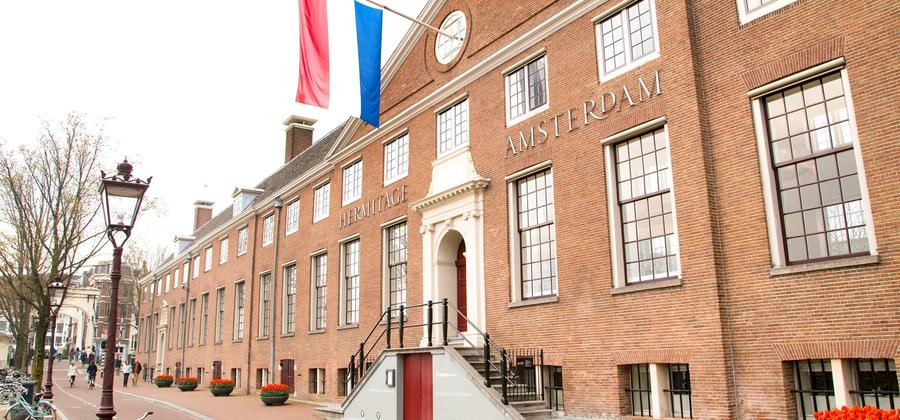
UV-filtering glazing solutions from SILATEC make it possible to preserve the original character of historic windows and at the same time reduce the amount of light entering them.
Imperial Treasury Vienna: UV-protective showcase glass from SILATEC
The Imperial Treasury in Vienna is pursuing an approach that combines UV protection and increased burglary protection with an unadulterated presentation of the exhibits. Display case glass from SILATEC supports this approach by protecting light-sensitive objects from UV radiation and at the same time offering a high degree of mechanical security. The high color neutrality of SILATEC panes helps to ensure that the exhibits behind the glass can largely be perceived as they are presented. This balanced combination of protection, security and visual quality was a key reason for using SILATEC display case glass.

The Imperial Treasury in the Vienna Hofburg preserves some of the most important cultural assets in Europe, including the imperial crown of the Holy Roman Empire, other imperial jewels, precious insignia, sacred objects and unique art-historical jewels and textiles from over a thousand years of history. The protection of these objects requires a special combination of burglar resistance and UV protection, as many materials - such as gold enamel, precious stones, historical fabrics and organic components - are sensitive to photochemical decomposition processes.
Kunstmuseum Basel - Thin window glazing for light control and color neutrality
At the Kunstmuseum Basel, the focus was on the careful coordination of glazing, lighting and the historical building fabric. As a traditional museum with sensitive architecture, the building requires solutions that can be integrated discreetly and at the same time support the visual impact of the art.
Thin and lightweight UV-protective glass from SILATEC was used, which only has a minimal impact on the existing structures and blends in well with the historical substance. The glazing is part of a targeted lighting control system in which daylight and lighting are guided in such a way that paintings can be perceived calmly, clearly and without distorting color influences. The high color neutrality of the glass contributes significantly to the differentiation of color tones, contrasts and surfaces.

At the same time, the glazing helps to protect light-sensitive works from UV radiation and combines conservation requirements with a restrained architectural effect. SILATEC glass thus makes an important contribution to a balanced presentation of art in the historic museum space.


FAQ - Frequently asked questions about windows with UV protection
Note:
The following FAQs answer general questions about UV protection and safety glass. However, specific questions about windows with UV protection are often complex and require more detailed explanations, as requirements can vary greatly depending on the application. For an individual assessment of glass with UV protection, we therefore recommend a personal safety consultation.
Why are SILATEC windows with UV protection suitable?
SILATEC windows with UV protection are suitable because they reducethe UV component of the incident light to a very low transmittance of up to 0.000*5 and thus significantly weaken UV-related photochemical decomposition processes, such as the fading of works of art.
Which window types can be fitted with UV-protective glass from SILATEC?
UV-protective glass from SILATEC can be used in a wide variety of window types - from small, heritage-protected windows with glazing bars to medium-sized glazing and large-format sliding and lift-and-slide elements. The weight advantage of the glass plays a particularly important role in large panes, while the integrated UV protection is relevant wherever the preservation of materials and works of art is to be supported in the long term.
How do windows with UV protection from SILATEC differ from conventional windows?
Conventional windows with triple insulating glass typically reduce UV radiation by around 80-82 % (measured in accordance with DIN EN 410). Windows with UV protection glass from SILATEC go well beyond this standard: the measured SILATEC Secura P6B glass has a UV transmission factor of up to 0.000*5. This greatly minimizes the UV component of the incident light, so that UV-related photochemical ageing processes - such as the fading of art - can be significantly reduced.
What are the advantages of windows equipped with SILATEC UV protection?
Windows with UV protection offer several advantages, such as protection against harmful UV rays, reduction of heat penetration, better energy efficiency and longer durability of furniture and other furnishings.
Where are windows with UV protection from SILATEC used?
UV-protective glass from SILATEC offers protection especially where cultural objects and paintings require special protection. For example, in museums, high-security buildings or exclusive private collections, because the glazing with a transmittance of 0.000*5 offers special protection and glazing from 16 mm can also be integrated into historical frames.